Why Under-Slab Hot Water Lines Fail First
In residential plumbing systems across Encinitas, California, hot water supply pipes fail beneath concrete foundations at more than triple the rate of cold lines. The physical reason lies in the intense thermodynamic stresses acting upon copper tubing embedded directly under concrete. When hot water lines cycle between cold room temperatures and 120-degree Fahrenheit pressurized water, the metal expands along its length. When flow stops, the copper contracts.
Because early residential builders in Leucadia, Cardiff, and coastal tract neighborhoods frequently laid copper tubing directly over crushed stone without protective polyethylene sleeves, continuous expansion rubs the exterior copper wall against abrasive rock surfaces. Combined with hot water accelerating internal chemical pitting from aggressive municipal minerals, thousands of thermal cycles inevitably produce a severe hot water slab leak repair Encinitas homeowners must address promptly.
Distinctive Symptoms of a Sub-Slab Hot Water Leak
A failure in the hot water distribution circuit exhibits unmistakable physical warning signs throughout the home:
- Noticeable Warm Spot on Floor: Walking barefoot across kitchen tile, entryway laminate, or bedroom carpet and feeling an isolated warm spot on floor Encinitas residents often discover is the clearest physical symptom of escaping hot water heating the concrete from beneath.
- Water Heater Running Constantly: If you observe your gas or electric water heater firing continually without any faucets, dishwashers, or showers operating, a subterranean pipe leak is draining hot water into the earth, prompting a water heater running constantly Encinitas emergency.
- Rapidly Escalating Gas or Electric Bills: Because the water heater must continuously heat new cold water entering the tank, your San Diego Gas & Electric (SDG&E) utility bill will demonstrate a dramatic spike in therms or kilowatt-hours.
- Reduced Hot Water Pressure & Rapid Depletion: Showering or washing dishes and running out of hot water in minutes occurs because pressurized volume is continuously escaping through the hot water line leak under slab Encinitas homes endure.
How Hot-Water Leaks Are Located with Thermal Imaging
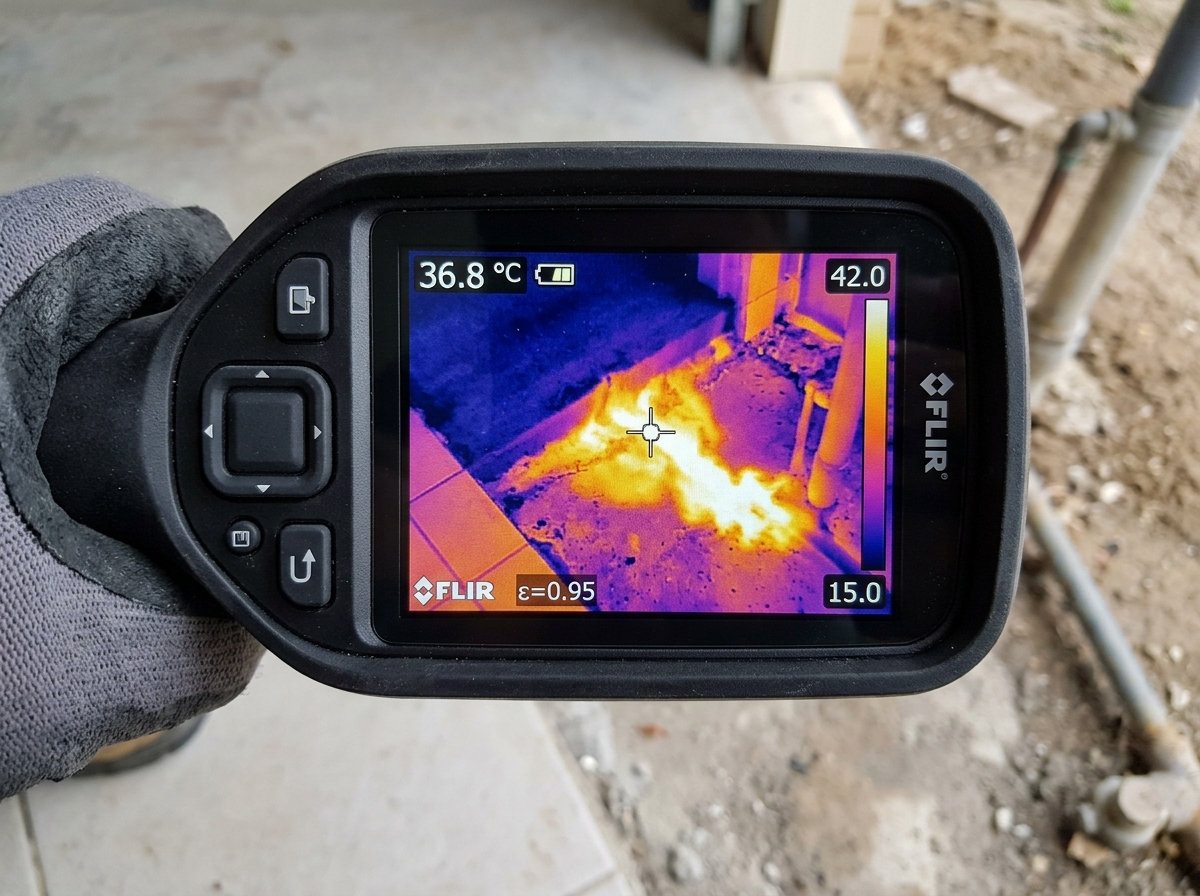
Locating a subterranean hot water line rupture is achieved with high precision using infrared thermography. When pressurized hot water escapes, it creates a heat conduction plume that radiates through the concrete foundation and warms the floor above.
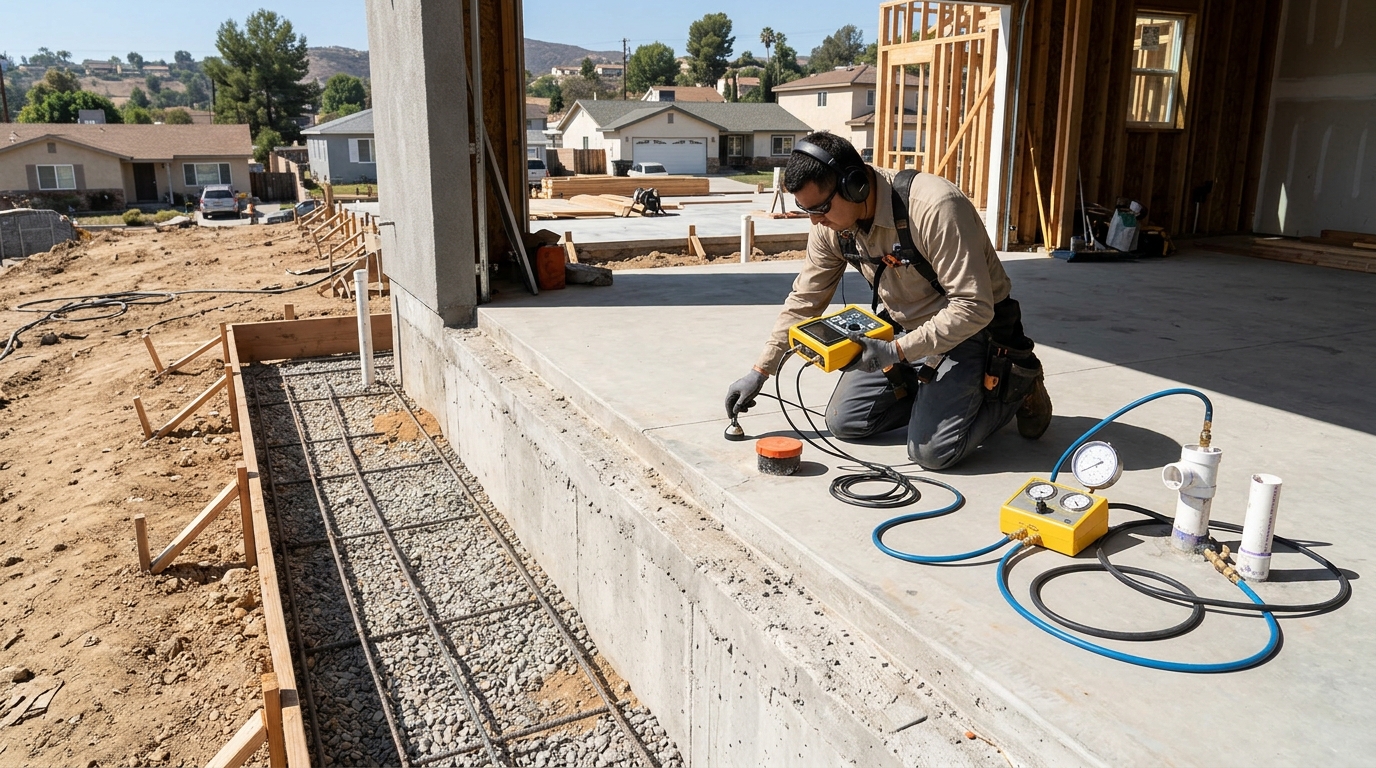
Using high-resolution FLIR infrared cameras, our diagnostic technicians scan the entire living area. The camera reveals thermal radiation gradients, showing the exact route of the underground copper run and highlighting the central point of highest thermal concentration where water escapes. When cross-referenced with acoustic listening sensors, this non-invasive approach verifies the exact spot before any restoration begins, providing a clean path to slab leak repair in Encinitas.
Restoration Options: Spot Repair vs. Overhead Reroute
Once the failure in the hot water line is pinpointed, homeowners face two primary restoration paths:
Option A: Direct Concrete Jackhammer Spot Repair
A localized excavation involves cutting through the finished flooring, chipping through 4 to 6 inches of concrete foundation, digging out sub-slab gravel, and soldering a new piece of type L or type K copper tubing. While technically viable if the leak is located in an accessible hallway and the surrounding pipe appears healthy, spot repairs carry drawbacks: the rest of the underground hot line remains old, brittle, and vulnerable to secondary leaks just inches away.
Option B: Overhead Line Reroute (Recommended)
The modern engineering solution for sub-slab hot water failures is a non-invasive slab leak reroute. Our plumbers abandon the leaking underground hot line entirely, capping it off at both ends so zero water enters beneath the slab. A new, flexible PEX water line is then routed through interior wall cavities and ceiling or attic spaces directly to the affected fixtures.
An overhead reroute eliminates concrete demolition, preserves expensive tile or hardwood flooring, and provides complete peace of mind by removing pressurized hot water from beneath the foundation forever.
Preventing Secondary Water Heater Failure
When an under-slab hot line leaks continuously for weeks or months, the constant firing places extreme wear on the water heater burner, heating elements, and internal tank lining. Rapid sediment buildup occurs, shortening tank lifespan. As part of our comprehensive diagnostics, we inspect tank integrity, relief valves, and circulation loops, coordinating water heater replacement or upgrades when the equipment has suffered thermal exhaustion.
Are Multiple Lines Failing?
If your home has suffered more than one hot-water slab failure, the copper network is reaching the end of its useful service life. Consider evaluating a complete whole-house repipe in Encinitas to replace both hot and cold lines with modern PEX-A piping.